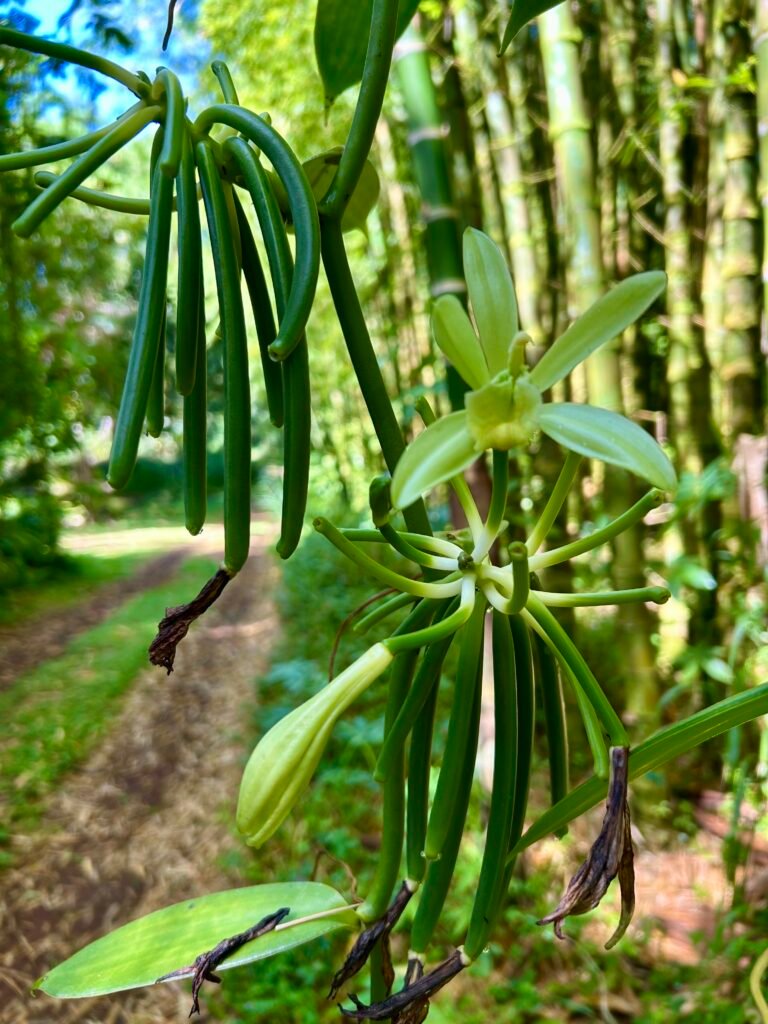
There’s something truly special about growing vanilla here in Hawaii. It’s a rare place where the climate and land just come together perfectly for this delicate vine to thrive. Vanilla comes from Mexico originally, but our islands, with their warm temperatures, high humidity, and wet and dry seasons, give it exactly what it needs to flourish.
But here’s the thing: growing vanilla isn’t just about having the right weather. It’s about caring for these plants through a whole year of gentle, attentive work.
Creating the Right Home for the Vines
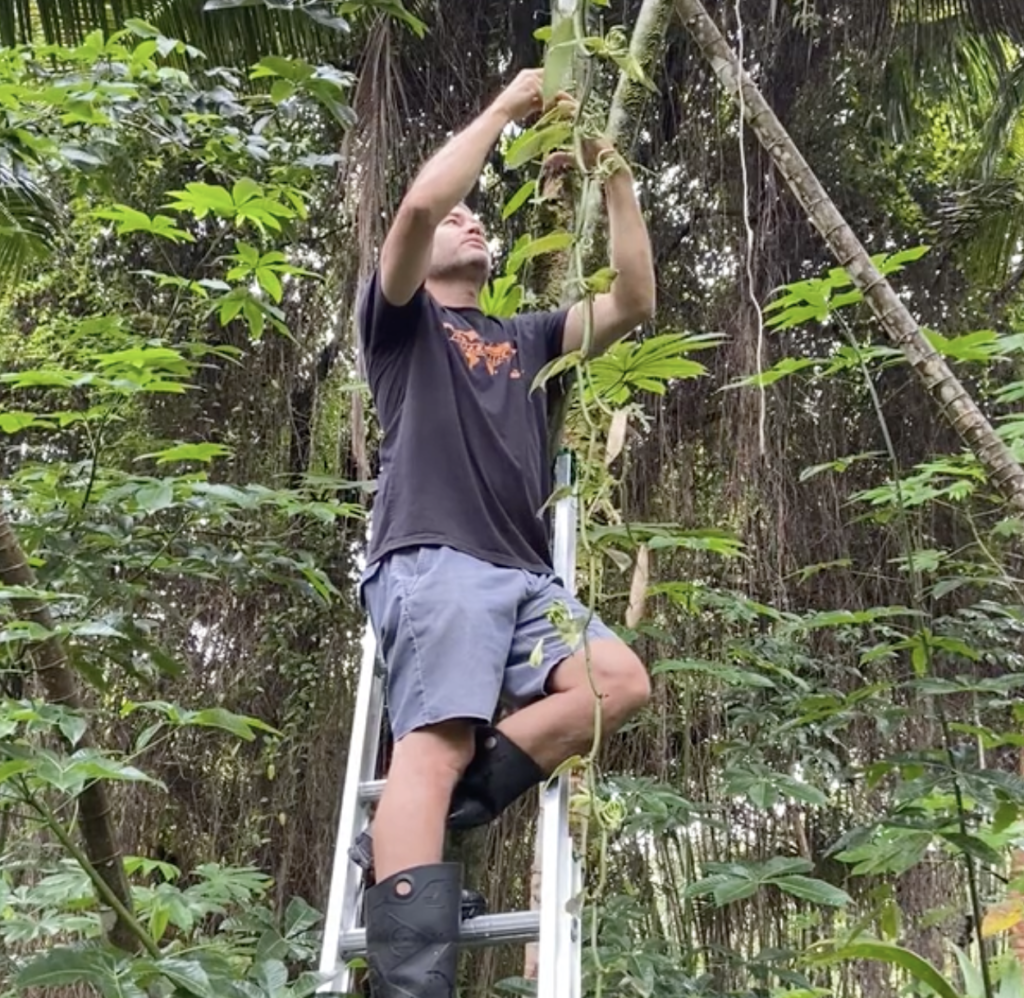
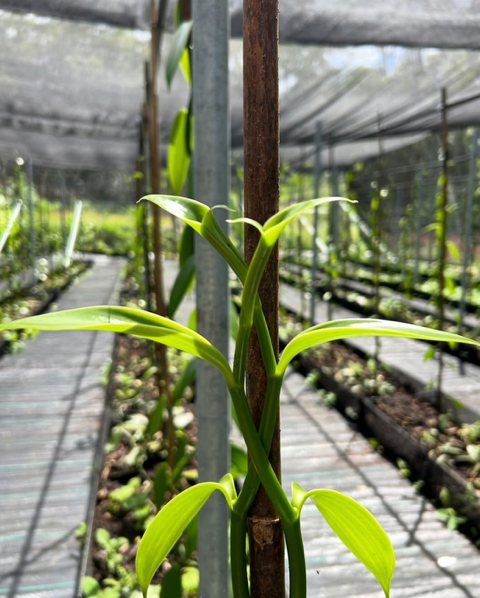
Vanilla is what we call an epiphyte, which means it naturally climbs on trees instead of growing in the ground. On our farm, we’ve built shade houses that recreate that forest environment. The vines get just enough filtered sunlight to grow strong without getting burned by the intense tropical sun.
We grow them in a special, nutrient-rich mix that feels like the soft organic layer you’d find on our jungle floor. We do have irrigation, but honestly, Hawaii does most of the work for us. Those frequent evening rains and the constant humidity mean the vines can drink right through their aerial roots and leaves, just like they would in nature.
The Hand-Pollination Dance
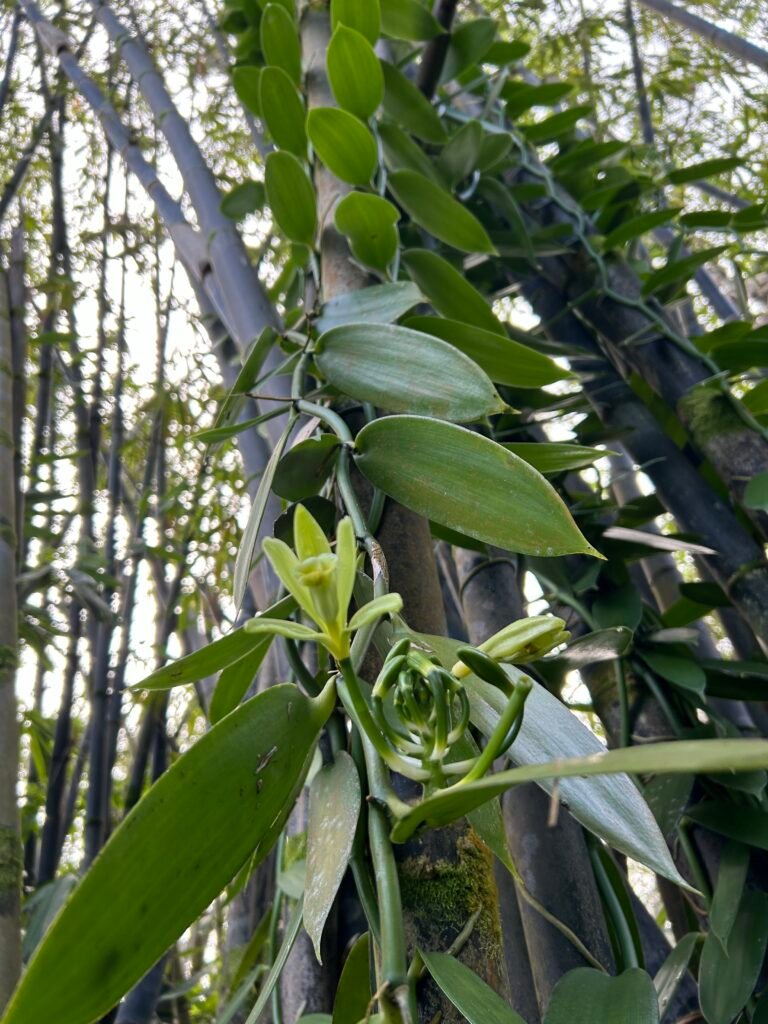
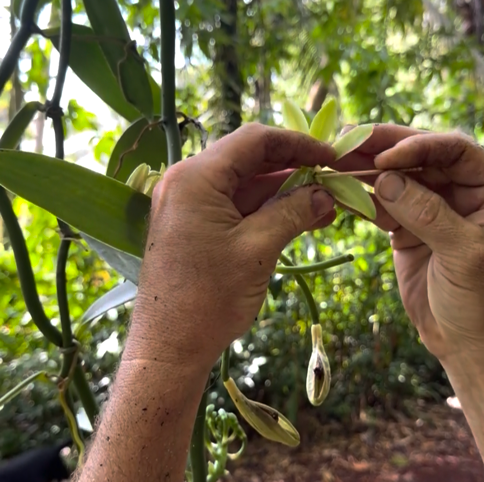
Here’s where things get really interesting, and a little more labor intensive. In Mexico, a tiny bee called the Melipona takes care of pollination but that bee doesn’t live in Hawaii, so every single vanilla flower needs to be pollinated by hand.
Each flower only stays open for about 5 to 6 hours a day in the morning. If we miss that window, the flower closes up and we miss it producing a bean. So during the blooming season, which runs from March through May, we walk through the jungle and shadehouse, watching for flowers everyday.
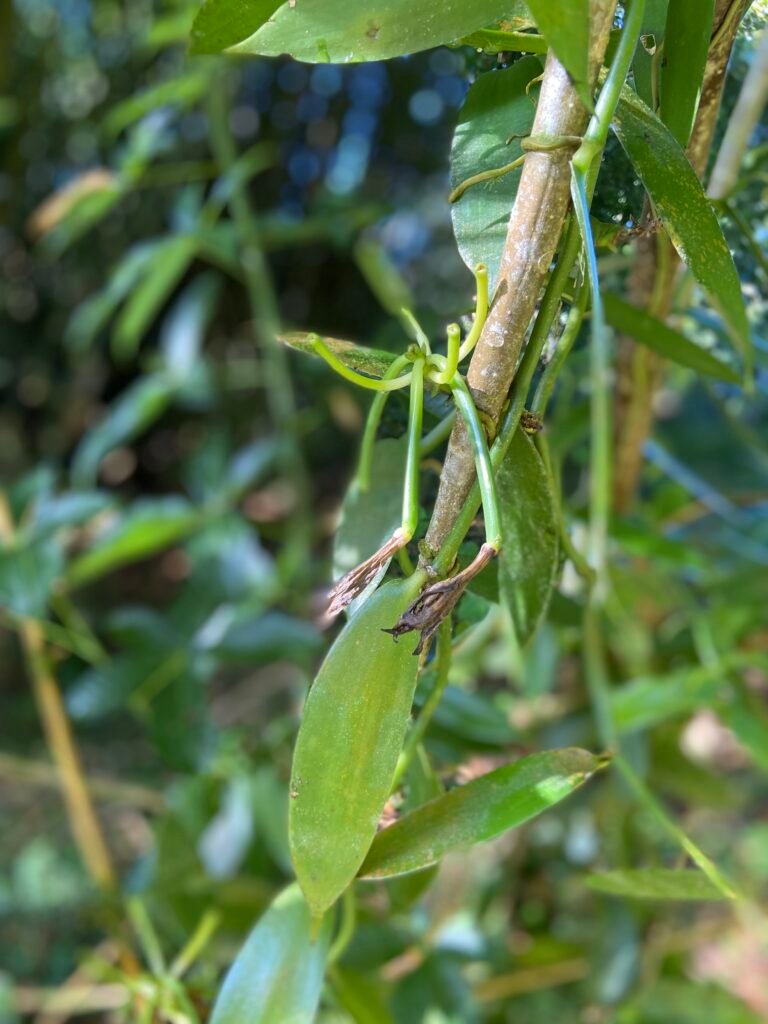
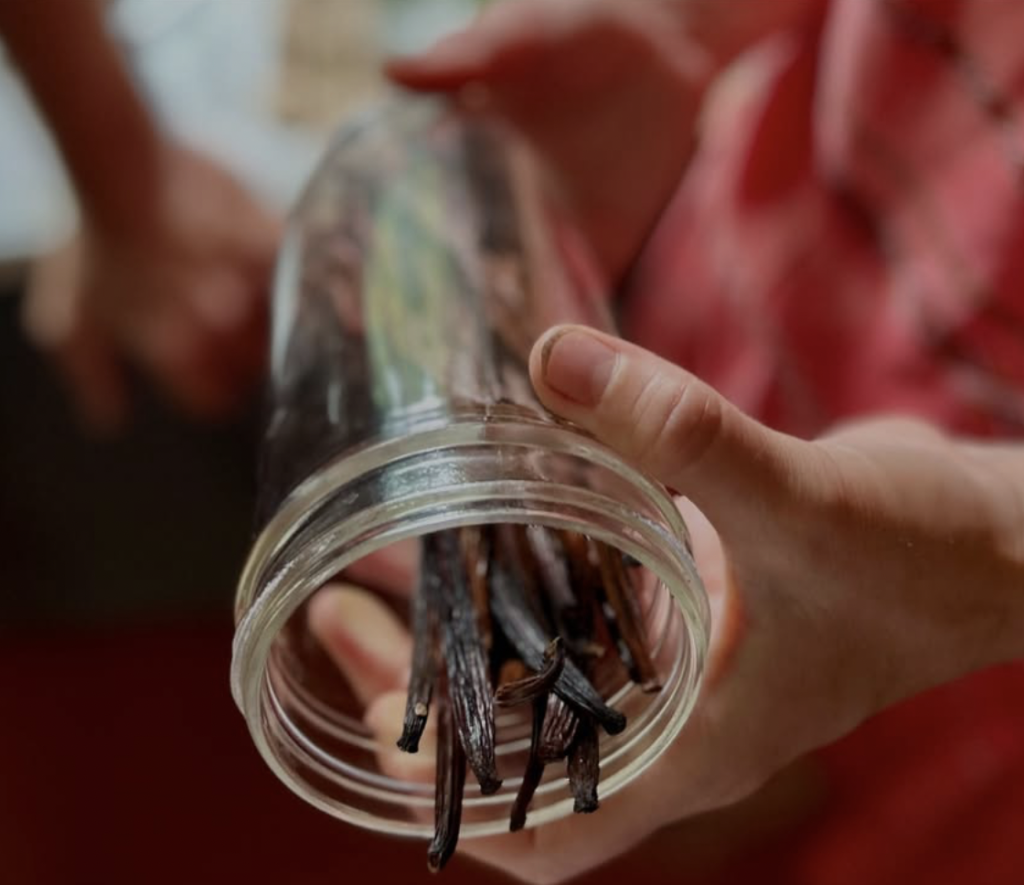
To pollinate an open flower we use a toothpick and gently move the pollen from the male part to the female part of each flower. If it is a successful pollination, the bean begins to develop and 9 months later it is ready to harvest. Then comes the curing. The green beans go through 4 to 6 months of sweating, drying, and resting. This is what transforms them from odorless pods into those dark, fragrant, flavorful beans we know and love.
What Makes Hawaiian Vanilla Special
Between our volcanic soil, the steady trade winds, and all that careful handwork, we end up with something unique. Hawaiian vanilla has this creamy, rich quality with soft floral and fruity notes. It’s different from beans grown elsewhere, softer, warmer, more delicate.
Working with the island’s natural rhythms and honoring the old-fashioned craftsmanship of hand-pollination means every bean carries a piece of Hawaii’s spirit. It’s not just farming; it’s a conversation with the land, one flower at a time.